MENU
CLOSE
[1]
Project
FreshCart
[2]
Client
FreshCart
Project type
UX/UI Case Study
Industry
eCommerce · Grocery
Year
2023
About project
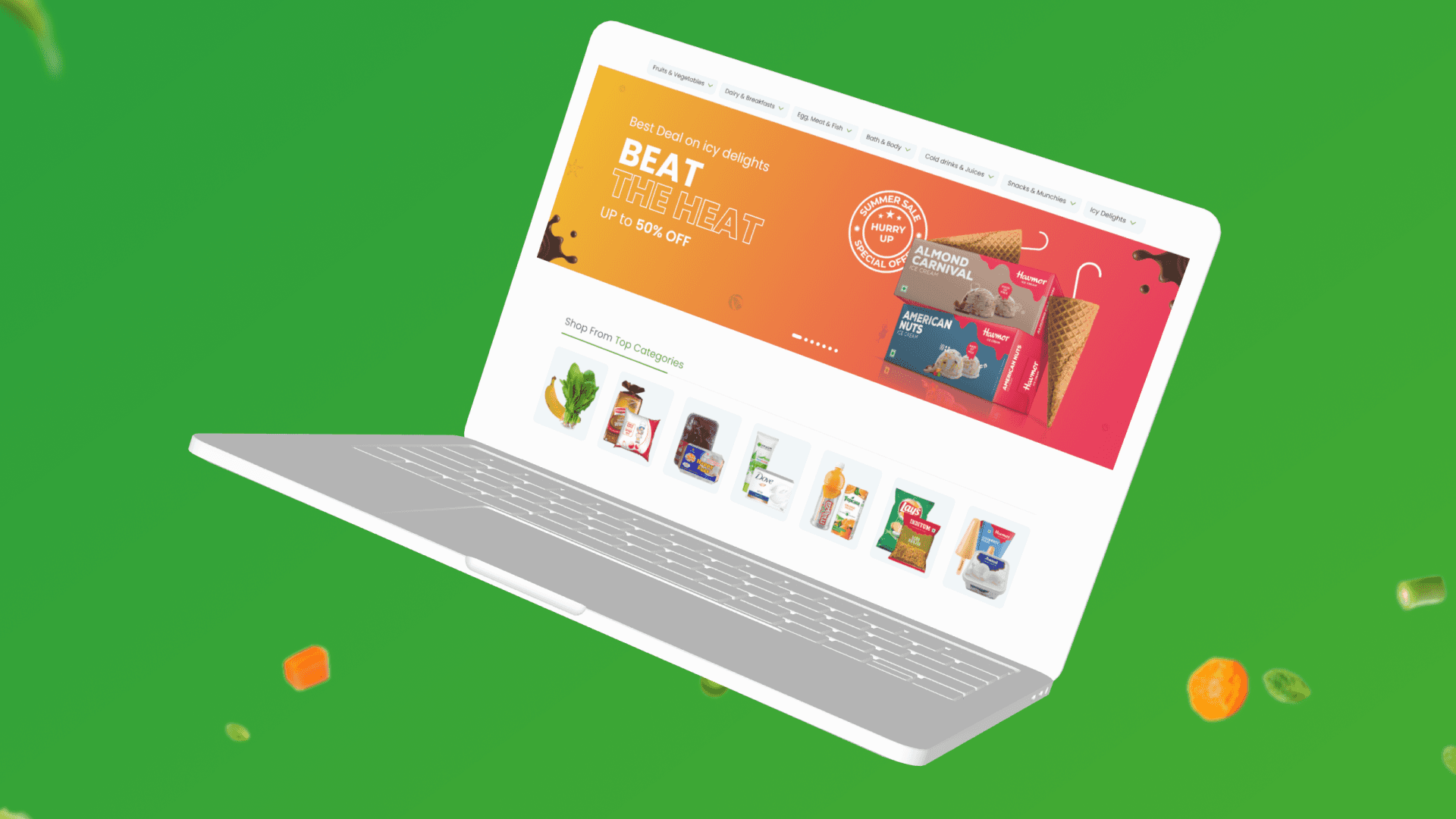
FreshCart is a concept grocery eCommerce platform designed specifically for urban Indian households who order groceries online every week. The central question I started with was not what features to build it was why ordering groceries online still feels slightly annoying, even for people who have been doing it for two or three years. The answer was that most eCommerce UX is designed to impress first-time buyers. The person making their fiftieth order has been completely forgotten. That gap was worth exploring. Three frustrations kept coming up when I spoke informally to regular online grocery shoppers in my network: you search for the same twenty items every single week with no shortcut to find them again, delivery fees appear only at the very last screen after you have filled your entire cart, and forty-plus top-level categories is not organisation it is chaos with labels on it. Those three frustrations became the design brief.
FreshCart is a concept grocery eCommerce platform designed specifically for urban Indian households who order groceries online every week. The central question I started with was not what features to build it was why ordering groceries online still feels slightly annoying, even for people who have been doing it for two or three years. The answer was that most eCommerce UX is designed to impress first-time buyers. The person making their fiftieth order has been completely forgotten. That gap was worth exploring. Three frustrations kept coming up when I spoke informally to regular online grocery shoppers in my network: you search for the same twenty items every single week with no shortcut to find them again, delivery fees appear only at the very last screen after you have filled your entire cart, and forty-plus top-level categories is not organisation it is chaos with labels on it. Those three frustrations became the design brief.
[3]
What I did
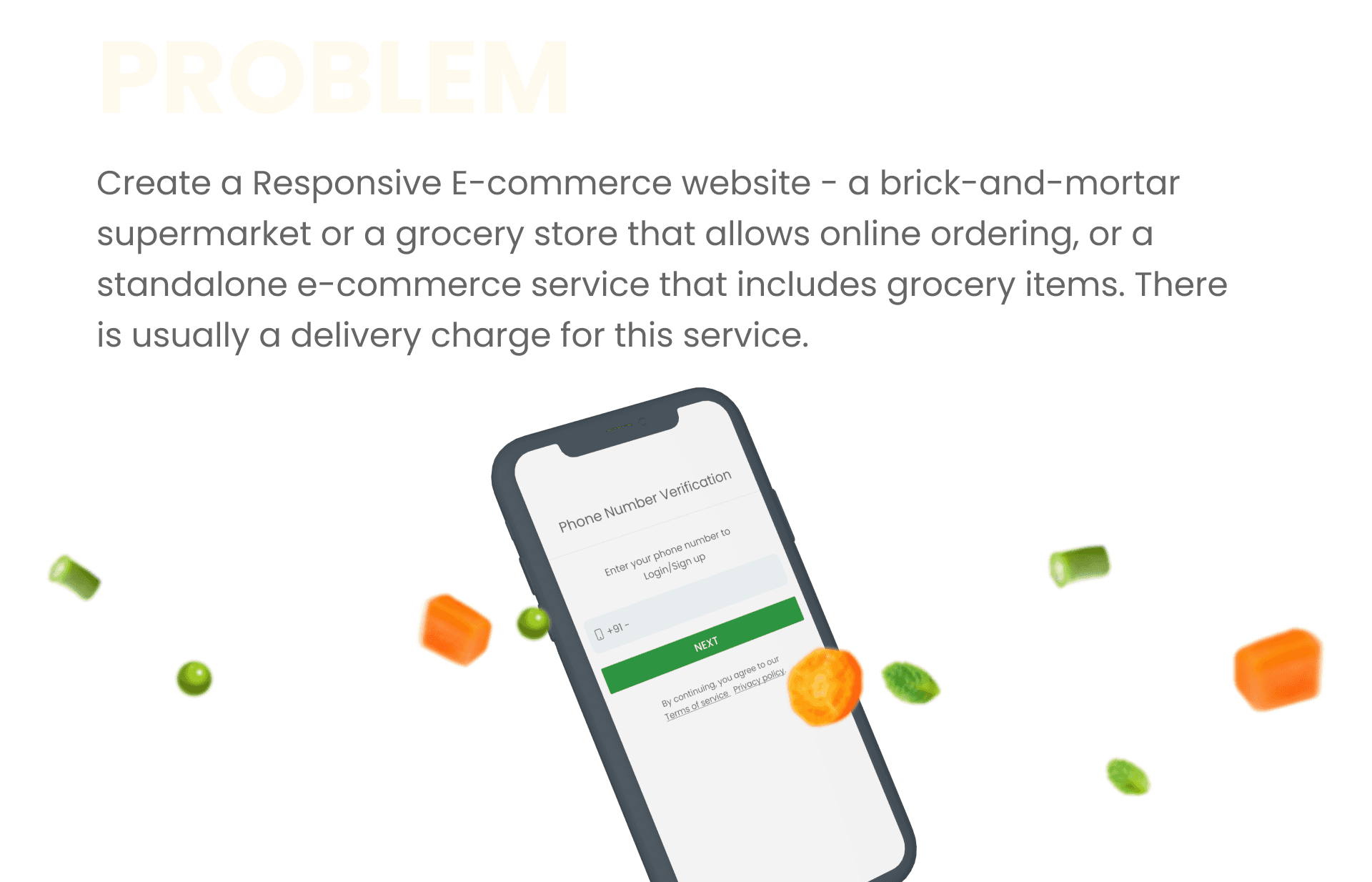
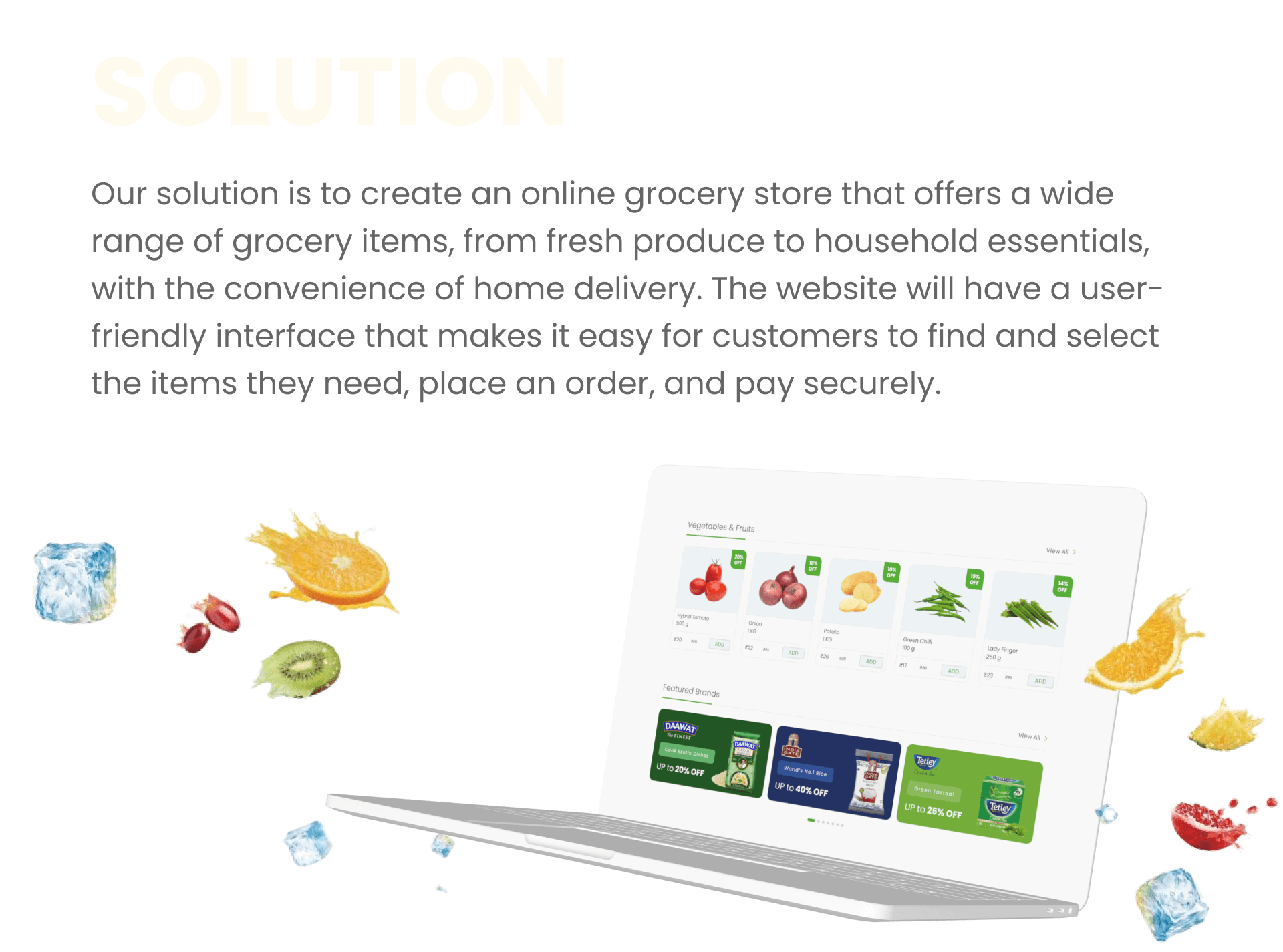
I designed the complete web and mobile experience, from informal research and information architecture through component design and high-fidelity delivery in Figma. The single most important feature in the entire design was My Usuals a personalised shelf on the home screen showing the user's most frequently ordered items with one-tap add-to-cart. For someone who buys the same twenty things every week, this single feature can reduce the entire weekly shop to under two minutes. I genuinely cannot explain why no major grocery platform has done this properly. A freshness badge system was introduced on all produce Harvested Today, Harvested Yesterday, or Stock Delivery because the single biggest reason people hesitate to order fresh vegetables online is that they cannot tell how fresh the product is. That label, visible on the product card without clicking into the product, directly addresses the most common objection. A live fee calculator in the cart shows the total including all charges as you add items, so there is no surprise fee at the end of the checkout. Checkout itself was condensed from six screens to three Address, Payment, Confirm with no forced account creation and no upsell interruptions. A full design token system and component library was documented for developer handoff.
I designed the complete web and mobile experience, from informal research and information architecture through component design and high-fidelity delivery in Figma. The single most important feature in the entire design was My Usuals a personalised shelf on the home screen showing the user's most frequently ordered items with one-tap add-to-cart. For someone who buys the same twenty things every week, this single feature can reduce the entire weekly shop to under two minutes. I genuinely cannot explain why no major grocery platform has done this properly. A freshness badge system was introduced on all produce Harvested Today, Harvested Yesterday, or Stock Delivery because the single biggest reason people hesitate to order fresh vegetables online is that they cannot tell how fresh the product is. That label, visible on the product card without clicking into the product, directly addresses the most common objection. A live fee calculator in the cart shows the total including all charges as you add items, so there is no surprise fee at the end of the checkout. Checkout itself was condensed from six screens to three Address, Payment, Confirm with no forced account creation and no upsell interruptions. A full design token system and component library was documented for developer handoff.
[4]
More projects
Explore other projects
CLIENT
PROJECT TYPE
INDUSTRY
YEAR
Healthcare Exam Platform
UX/UI Case Study
Healthcare · Education
2023
Healthcare Exam Platform
UX/UI Case Study
2023
Healthcare Exam Platform
2023
PolicySafe
Mobile App Design
Insurance · FinTech
2023
PolicySafe
Mobile App Design
2023
PolicySafe
2023
DeepCore Marine
B2B Website Design
Marine · Offshore Services
2025
DeepCore Marine
B2B Website Design
2025
DeepCore Marine
2025
Explosive Whey
eCommerce Website Design
Sports Nutrition · D2C
2022
Explosive Whey
eCommerce Website Design
2022
Explosive Whey
2022
Anovate
SaaS Landing Page UI
B2B · SaaS · Workflow Automation
2024
Anovate
SaaS Landing Page UI
2024
Anovate
2024
Pandit Chai
Website Redesign
Food & Beverage
2025
Pandit Chai
Website Redesign
2025
Pandit Chai
2025
Bend Soap Co.
eCommerce Redesign
D2C · Skincare
2024
Bend Soap Co.
eCommerce Redesign
2024
Bend Soap Co.
2024